

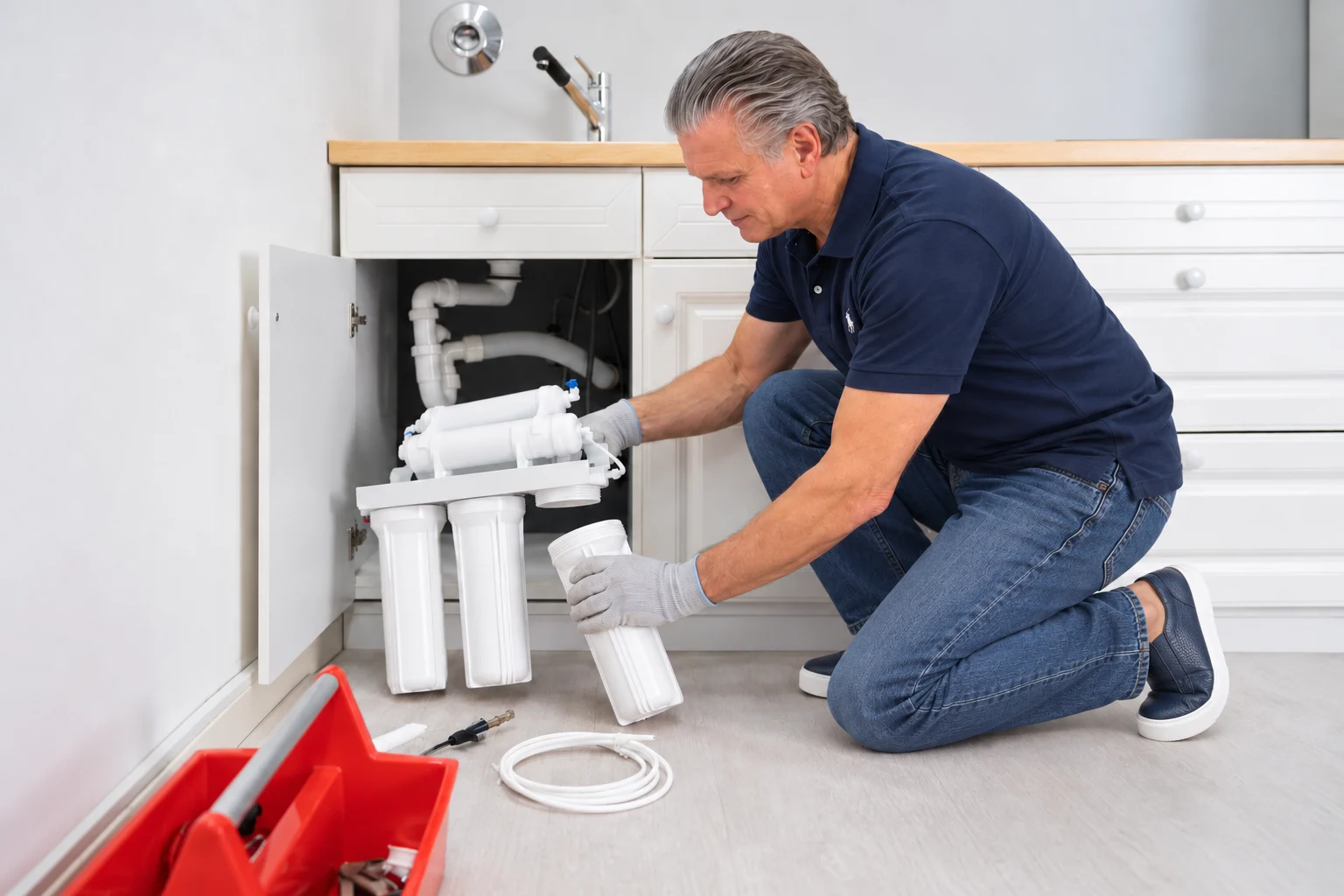
What do you want the filter to do?
Identify the result you want, such as changing the taste of drinking water or replacing an existing system. Check whether the product is designed for that purpose. The word "filter" alone does not tell you what a device can treat.
The Drinking Water Inspectorate (DWI) explains that public tap-water supplies in England and Wales do not generally need additional home treatment for health protection. A filter may be a preference. If the supply changes unexpectedly, ask your water company for advice before assuming a filter will solve the cause.
Which type of home water-filter system fits your plans?
A standalone jug avoids plumbing work. A plumbed-in system combines a filter with a way to dispense the treated water. An under-sink cartridge and a dedicated tap can therefore be parts of the same system. Choose the arrangement around how you want to use the sink.
Scroll across to see all columns.
| Arrangement | What changes? | What should you check? |
|---|---|---|
| Filter jug | A separate container is filled from the tap; it has no water-supply connection. | Usable jug capacity, storage space and replacement cartridges. |
| Under-sink filter with separate dispenser | A cartridge sits below the sink and supplies a dedicated drinking-water tap. | Cupboard clearance, pipe connections and a suitable position or opening for the dispenser. |
| Filter with a three-way mixer | A compatible mixer provides regular hot and cold water plus a separate filtered-water flow. | Tap replacement requirements, supply compatibility and space for the filter underneath. |
DWI distinguishes standalone and plumbed-in filters. BRITA's mypure P1 illustrates the separate-dispenser arrangement; its three-way tap range illustrates the mixer option. These are equipment examples, not a recommendation for every kitchen.
Reverse-osmosis and whole-property treatment need a separate assessment of the complete system. Do not assume the space, connections or maintenance of a drinking-water cartridge will cover them.
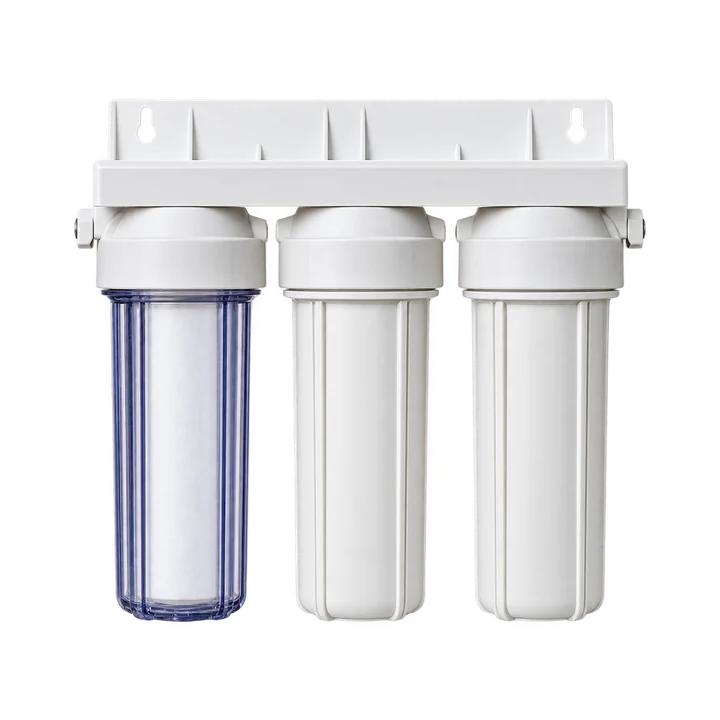
What needs checking around the sink?
Check the complete product specification against the sink, tap and available cupboard space. Leave the access the manufacturer requires for fitting and changing the cartridge. A unit that fits inside the cupboard may still be impractical if the cartridge cannot be removed without moving other equipment.
- Filter and tap: confirm the exact models, supplied kit and any additional parts.
- Connections: check the required water supply, permitted pressure and connection sizes.
- Space: allow for hoses, waste pipes, stored items and cartridge removal.
- Outlet: establish whether an existing tap is suitable, or a replacement or separate opening is needed.
DWI recommends a qualified plumber and checking with your water company before installation that the device meets water-fittings regulations. Confirm the system's suitability and who will carry out the work before booking.
How often should you change a water-filter cartridge?
Use the replacement rule for the exact cartridge and system. A limit may depend on elapsed time, water volume and hardness. Where both a time limit and a volume limit apply, replace the cartridge when the first is reached. These BRITA examples show why one interval cannot cover every filter:
- MAXTRA PRO jug cartridge: BRITA's UK guidance sets a maximum of 150 litres or four weeks, whichever comes first. The 150-litre figure applies at a water hardness of 10-12 degrees dH; harder water can reduce that capacity.
- mypure P1 with a P1000 cartridge: the instructions require replacement at the applicable volume limit or after 12 months, whichever comes first. The volume limit depends on the hardness setting, so "up to 12 months" is not a guaranteed cartridge life.
Preparation also varies. For mypure P1, the same instructions require rinsing after fitting or replacement until the water is clear and bubble-free, using at least two litres. Use your own system's procedure, including any cleaning, flushing and indicator reset; do not transfer that quantity to another model.
Keep a simple maintenance record:
- The system and cartridge model, plus the correct replacement part.
- The date fitted and the specified time or volume limit.
- Any hardness setting and the manufacturer's replacement indicator instructions.
- The cleaning, flushing and restart instructions to follow after a period without use.
Before buying, check replacement availability and price as well as the initial equipment cost. Keep the manual accessible so routine care does not depend on finding an old order confirmation.
How do you prepare for a water-filter cartridge change?
Match the complete system and cartridge codes before ordering. A similar shape or a familiar brand name does not establish compatibility. Photograph the label while everything remains connected, find the current instructions, and check that you can reach the cartridge and the specified isolation control.
- Check what is being replaced. A removable cartridge, a filter housing and a complete system are different jobs. Confirm the replacement part and any seals the manufacturer specifies.
- Read the replacement sequence first. Identify the instructions for isolation, pressure release, removal and refitting. Do not undo a pressurised housing or improvise a release method from another model.
- Plan the restart. Follow the system's leak checks, flushing and indicator-reset instructions. Keep the installation date and replacement rule with the manual.
For example, BRITA's mypure P1 manual gives its cartridge-exchange sequence separately from initial plumbing installation. If you cannot identify the system, isolate it as instructed or safely reach the connections, arrange qualified help before opening it.
What information does an installer need?
Give the installer the product link or manual, and explain whether the work is a new installation, a replacement system or a cartridge change. Add a wider photo of the cupboard and a clear picture of any easily accessible model label. Leave everything connected for the photos.
Ask the installer to confirm the system's suitability, supply connections, materials, labour, total including VAT and maintenance responsibilities. Cartridge-only equipment prices do not establish an installation price, and CHS's general handyman rates should not be treated as a quote for specialist plumbing work.
Choose the equipment and the right help.
Use the exact manufacturer's instructions for cartridge care and a suitably qualified plumber for installation or changes to the water supply. This equipment guide does not establish whether a particular system or job is within Colin's services.
For the other jobs on your list, see the home repairs and published rates, then describe the work before booking.