
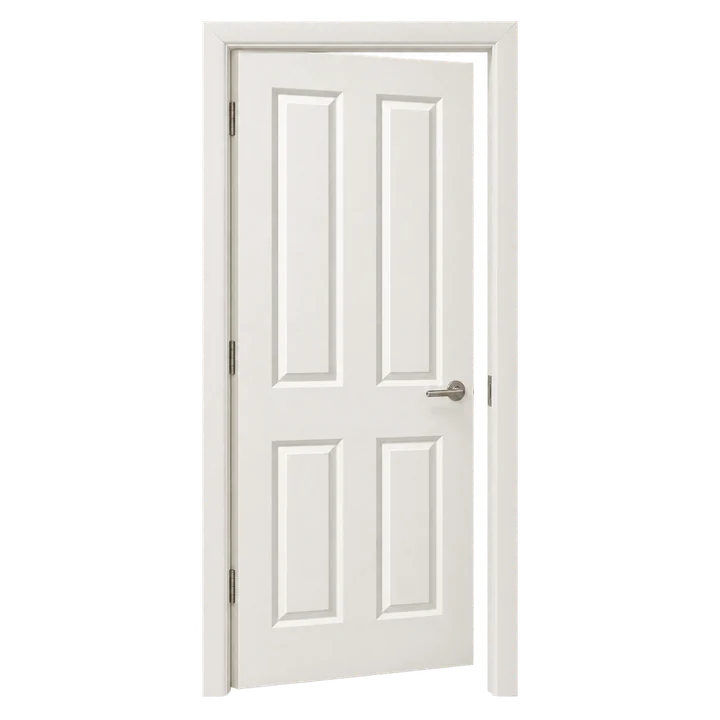
Is this an ordinary internal door?
This guide covers diagnosing a conventional internal hinged door. Fire doors, flat entrance doors, external security doors and specialist sliding systems need their own assessment. Do not change a fire door's edges, seals, closer or ironmongery using a general household repair guide.
The British Woodworking Federation's fire-door maintenance guidance explains that gaps and hardware must match the door's certification. Report a suspected fire-door fault to the building owner or manager and arrange competent assessment.
Where is the door sticking?
Move the door slowly without forcing it. Note whether contact occurs near the top, along a side, at the floor or only when the latch enters the frame. Look for rubbing marks. Record recent painting, new flooring, a leak or a change that appeared suddenly.
Scroll across to see all columns.
| Observation | Check before deciding on a repair |
|---|---|
| Door appears dropped; gaps taper | Hinge movement, loose fixings and the condition of the timber |
| Paint rubs at a small contact point | Paint build-up, coating condition and door alignment |
| Bottom catches after flooring work | Floor level, coverings and the door's permitted adjustment |
| Door swings freely but does not latch | Latch operation and alignment with the strike plate |
| Several doors change or cracks appear | A wider building or moisture issue needing assessment |
These are starting checks, not diagnoses from a photograph. Keep the observations together so any repair addresses the cause rather than simply making one gap larger.
Check the hinges before trimming.
Inspect the hinges for movement and damaged fixings. On an ordinary internal door, a loose fixing in sound timber may be secured using the correctly fitting hand screwdriver while the door is supported. Do not remove hinge screws or release the door's weight as an exploratory step.
B&Q's internal-door guide identifies loose hinges as a cause of a dropped door. If a screw spins, the hinge is bent or timber splits, stop tightening. The fixing or hardware needs assessment; repeated adjustment cannot restore damaged material.
After a minor correction, check the full swing and latch again. Keep hands clear of closing gaps. If the door remains heavy to move or its position changes again, do not keep forcing it shut.
What if it started after painting or flooring?
Paint build-up can reduce clearance, and a new floor covering can meet the lower edge. First check that fresh paint has reached the maker's required drying stage. See the paint drying guide: touch dry, recoatable and ready for contact are different stages.
Before sanding an old or unknown coating, establish whether it needs hazardous-material assessment. If timber removal is proposed, identify the door and obtain its fitting instructions. Do not assume a veneered or hollow-core door can be reduced like a solid timber board.
XL Joinery's internal-door instructions specify how permitted reductions are shared between edges and distinguish fire-door requirements. They are instructions for those products, not a universal trimming allowance. Previous alterations also matter. Any permitted cut edges need the finish specified for that door.
What if the door will not latch?
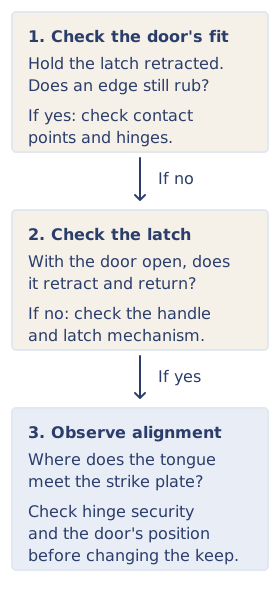
A latch that does not work with the door open is a different fault from a working latch missing the opening in the frame. Use the following observations to separate the mechanism from the door's fit. Keep the door open if the handle or latch is unreliable, so it cannot trap someone in the room.
- Check the leaf with the latch retracted. Hold the handle down and move the door gently towards the frame, keeping fingers clear. If an edge still rubs, return to the contact and hinge checks above. Do not force it shut.
- Check the latch with the door open. Operate and release the handle normally. Note whether the tongue retracts fully and returns, or whether the lever is loose or fails to return. The loose door handle guide explains these hardware symptoms; changing the frame opening will not fix them.
- Observe alignment only if both checks pass. Bring the door gently towards the keep, also called the strike plate. Note where the tongue meets it and whether the gaps around the leaf are even. A recent change in hinges, paint or flooring is useful context.
B&Q's internal-door advice describes a latch missing its striker plate as an alignment problem. Check hinge security and door position before proposing any alteration to the keep. Do not enlarge its opening or remove frame material blindly.
For assessment, send a photo of the latch with the door open, the keep, and a wider view showing the closed-door gaps if it can be closed safely. Explain which of the three checks failed. Fire doors and entrance security hardware need the separate assessment described at the start of this guide.
When should you arrange help?
Get help if the door is difficult to support, fixings are damaged, the construction is unknown or adjustment would involve trimming. Sudden movement, damp timber, new cracks or several affected doors need their cause assessed. Avoid treating repeated swelling as a reason to shave off more timber each time.
For a home repair enquiry, send your postcode, wider door photos, hinge close-ups and the point of contact. Include any maker's label, recent work and whether the latch functions. We can then discuss the appropriate next step and any making good.
Sources used in this guide
Show me where the door catches.
Send your postcode, hinge and door photos, and explain when the problem started. Mention new paint, flooring or moisture and whether the door closes onto its latch.
Home repairs enquiries are welcome from Kingston, Richmond and Merton.
Message me on WhatsApp