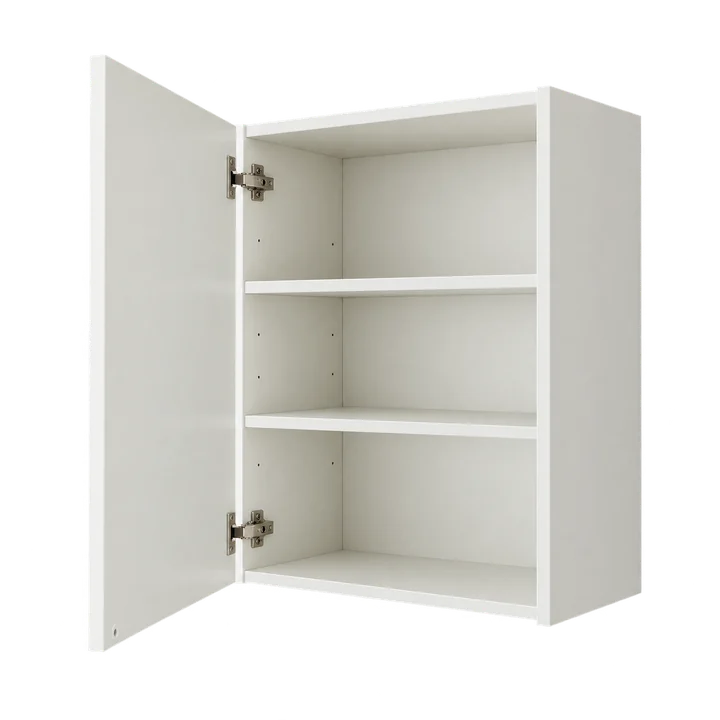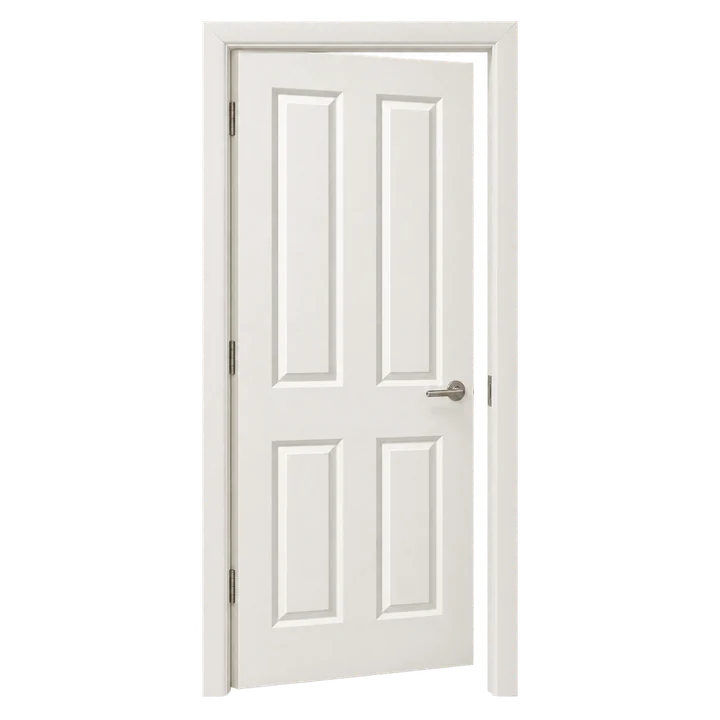

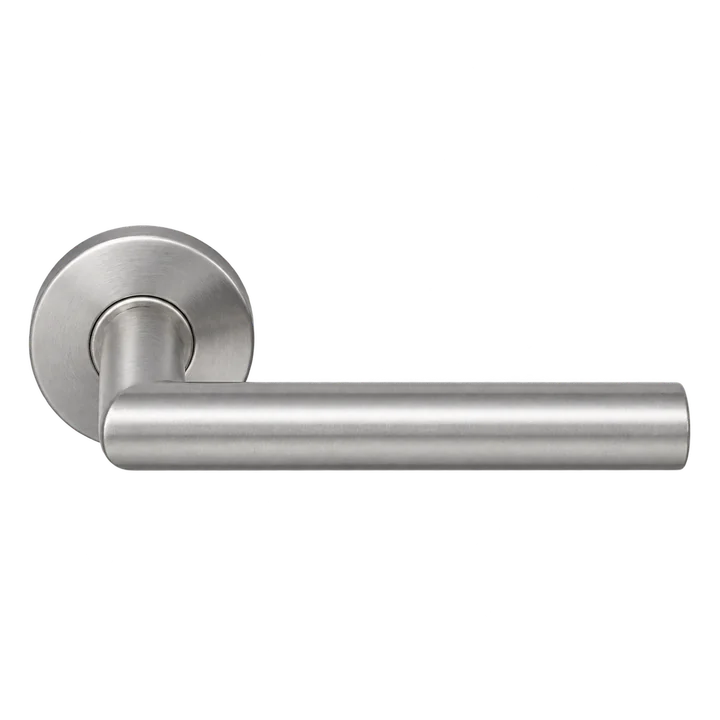
Which door handles does this guide cover?
This guide covers an ordinary internal lever handle on a round rose or a longer backplate. The rose or backplate is the part against the door; the spindle is the shaft connecting the handles through the latch. Find the brand or fitting instructions before removing a cover.
Fire doors, flat entrance doors, external security doors, escape hardware and unfamiliar multipoint locks need the appropriate specialist. A familiar-looking lever does not make the whole door a standard internal assembly. London Fire Brigade advises against carrying out repairs or alterations to a fire door yourself.
For an ordinary internal door, keep it open and stable during the checks, with a clear way out. Have a correctly fitting hand screwdriver, the specified hex key if needed, and a small container for parts. Do not test a suspect latch by shutting yourself into the room.
What part of the handle is loose?
Watch the handle while operating it gently. Check both sides of the door. The point that moves helps you choose the next inspection; it does not, on its own, prove which part has failed.
Scroll across to see all columns.
| What you notice | What to check |
|---|---|
| The whole plate moves against the door | Mounting fixings and the material or threaded fitting they secure into. |
| The plate stays still but the lever wobbles | Spindle engagement, a handle grub screw if fitted, and wear inside the lever. |
| The lever droops or does not spring back | Return action and possible binding; tightening alone may not resolve it. |
| The lever turns but the latch stays out | Connection between handle, spindle and latch. Keep the door open. |
| A screw turns without becoming secure | Damaged threads or fixing material. Stop tightening. |
If the handle and latch operate normally with the door open but the door catches on the frame, use the separate sticking-door and latch-alignment guide. Moving the handle plate will not correct a dropped door.
How do you tighten a loose internal door handle?
- Record the starting position. Photograph both sides and identify the fixing that corresponds to the movement. Support the opposite handle if the instructions require a fixing to be released.
- Check an accessible mounting screw. If it is the correct screw and the surrounding material is sound, secure it gradually with the right hand tool. Keep the plate sitting evenly. Stop if it spins, the head starts to damage, or the plate distorts.
- Check the lever connection where applicable. Use the maker's instructions for the spindle position and grub-screw engagement. Do not tighten a screw against an incorrectly positioned or insufficiently engaged spindle.
- Refit the cover and test before closing. Check that both levers move freely, return as intended and retract the latch fully. The plate should remain secure during normal use.
Coastal's troubleshooting guidance distinguishes incorrect spindle engagement, spindle length and spring-cassette faults. Its component details apply to the relevant Coastal hardware. Do not copy a spindle-cutting instruction or assume a replacement spring will fit an unidentified handle.
Only try normal closure once the open-door checks are reliable and you can reopen the door. If the handle becomes stiff after tightening, stop and review the fit. Extra force is not a successful repair.
When does the handle need repair or replacement?
A loose screw in an intact fixing is different from a screw with damaged threads, a fixing hole that has lost its grip, or a worn spindle. Toolstation's fault guide identifies these as separate causes. Repeated tightening cannot restore missing material or a worn connection.
Do not substitute a longer screw or put filler, glue or threadlock into the assembly as a general remedy. First establish the door construction, fixing arrangement and condition. A through-bolt, a screw into the door and a grub screw need different assessments.
Before ordering parts, record the handle and latch model, door thickness, fixing centres, spindle specification and whether the handles are sprung. Check these against the supplier's compatibility information. A replacement that covers the old marks may still be mechanically unsuitable.
For help with an ordinary internal handle, see my home repairs service. Send the observations below so we can discuss whether the job involves securing a fitting, replacing a compatible part or assessing damage to the door.
Sources used in this guide
Show me what moves when you use the handle.
Send your postcode, photos of both handles and the whole door, any brand marking, and a short description of the movement. Mention whether the latch retracts, whether a screw spins, and whether this is an ordinary internal door or an entrance or fire door.
Home repairs enquiries are welcome from Kingston, Richmond and Merton.
Message me on WhatsApp