
What should you check before removing the drawer?
Empty the drawer, open only as far as it moves normally and look for a utensil, stored item or loose object crossing its path. Check above the contents and behind the drawer where you can see safely. Do not reach blindly into a closing gap or force the drawer past a stop.
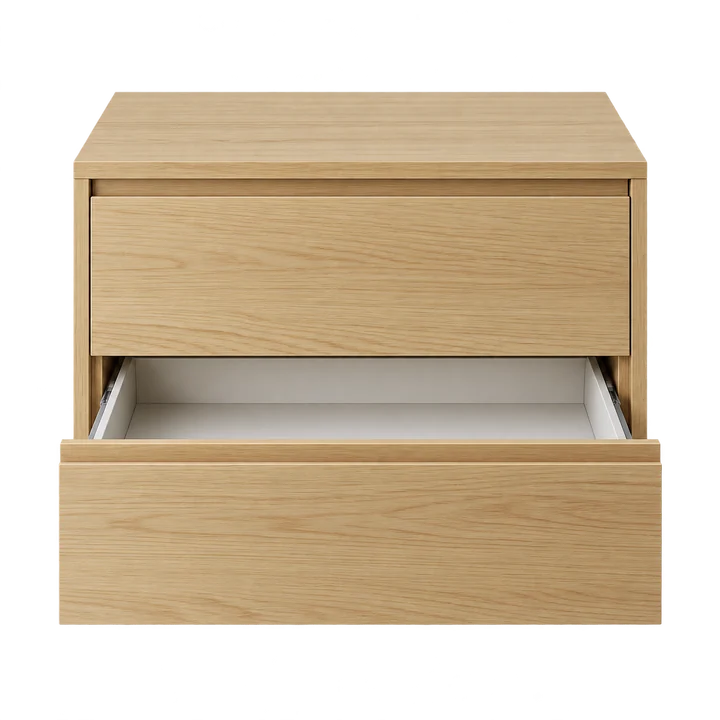
Identify the furniture from its label, order details or assembly instructions. A wooden drawer box may run on metal hardware; its appearance does not tell you how to remove it. Traditional timber runners, rollers, telescopic ball-bearing slides and concealed runners need different methods.
Keep other drawers closed while working, and make sure the furniture is stable with its specified wall securing in place. Support a heavy drawer with help before releasing it. Do not remove an anti-tip device, safety stop or interlock to gain access. Wickes' drawer guide also directs readers to the particular unit's assembly instructions because construction varies.
Where does the drawer stop or rub?
Move it gently and note the first point of resistance. A front touching the next drawer and a runner stopping inside the cabinet are different faults. Use these observations to narrow the check before turning a screw.
Scroll across to see all columns.
| Symptom | First checks |
|---|---|
| Stops suddenly at one point | Contents, an accessible obstruction, a projecting fixing or visible runner damage. |
| Front rubs or gaps look uneven | Correct seating, secure attachments and the maker's front-alignment controls. |
| Closes empty but catches when loaded | Overfilled contents, permitted load, loose attachments or a distorted drawer base. |
| Almost closes but loses the final pull | Obstruction and seating first, then the identified soft-close mechanism. |
| A runner moves away from the cabinet | Fixing and board condition; stop using it until the attachment is sound. |
| Timber rubs or material looks swollen | Contact location, loose joints and possible moisture or distortion before sanding. |
Photograph the gap and contact point before making changes. If several drawers are affected, include a wider view of the cabinet rather than assuming each runner has failed separately.
How do you remove and refit a drawer safely?
Find the exact removal diagram before releasing anything. Keep the empty drawer supported and follow the shown release sequence. If it does not come free as described, stop and check for an additional fixing, stop or a different hardware version. Pulling harder can damage the system.
The differences are practical. Wickes' Newland unit instructions distinguish a whole-drawer release beneath the box from a separate screw-operated front release. Turning the wrong screw could detach the front without releasing the drawer. These instructions are for Newland, not every kitchen drawer.
For the identified MOVENTO version in Blum's tilt-adjustment demonstration, the locking devices beneath the drawer release it from its runners. Again, use the matching instructions and support the drawer throughout.
After refitting, confirm every attachment has engaged using the maker's checks before loading it. Do not assume that a drawer sitting level is positively connected. Test normal travel empty, then with a modest load within the furniture's stated limits.
How do you correct an uneven drawer front?
First confirm that the drawer is seated correctly, its fixings are secure and nothing blocks its travel. If the box moves smoothly but the front catches a neighbouring panel, consult the front-adjustment diagram. Identify height, sideways movement or tilt rather than loosening everything together.
- Compare the gaps. Check the top edge and both sides with the drawer almost closed, without pushing through contact.
- Choose one supported adjustment. Mark or photograph the initial setting. Make a small change with the specified control.
- Recheck the whole travel. Look at the opposite gap too. Secure any locking fixing that the instructions require before use.
On the MOVENTO version described by Blum's side-adjustment guide, the coupling controls lateral movement and a rear control can correct the angle. The same manufacturer describes a different arrangement for TANDEM. This is why a generic instruction to turn the right-hand screw clockwise is unreliable.
If the runner or cabinet fixing moves, solve that attachment fault before alignment. If the neighbouring cupboard door is the actual obstruction, use the cupboard-door guide to assess it separately.
What if the soft-close drawer will not pull shut?
Start with the empty drawer and the same obstruction and seating checks. Then identify which closing technology is fitted. Soft-close damping, mechanical push-to-open and electrically assisted opening are different functions, even when they share a runner family.
Blum publishes separate MOVENTO fitting and motion-technology instructions. Use the relevant document for any specified reset, engagement or gap adjustment. Do not pull an unknown damper with pliers, bend a catch or defeat a stop to make it close.
A drawer front can align neatly while its closing mechanism remains faulty. Conversely, the mechanism may be sound but unable to overcome an obstruction. If normal travel is clear and the correct setup does not restore the action, ask the hardware supplier about the compatible replacement component.
Should you lubricate, sand or replace the runners?
Clean accessible dirt using the furniture and hardware maker's method. Blum's fittings-care leaflet recommends a soft cloth used damp rather than wet, followed by drying, and warns against abrasive and certain chemical cleaners. It is cleaning guidance, not permission to oil every runner.
Do not add oil, general-purpose spray, wax or soap to an unidentified mechanism. On a traditional wooden drawer, locate the actual rubbing surface and check joints and moisture first. Sanding a swollen or loose drawer before understanding the cause can remove material from the wrong place.
Bent rails, broken rollers, loose joints and damaged cabinet fixing points need assessment. A new runner cannot repair crumbling board. For replacement, match the system, mounting arrangement, required clearances, nominal length, load specification and closing features; appearance and length alone are not enough.
For an existing fault, see my home repairs service. If the drawer has never worked after assembly, include the furniture model and assembly stage when asking about furniture assembly help.
Sources used in this guide
Show me where the drawer stops.
Send your postcode, the furniture or kitchen model, a wider photo, both runners if safely visible, and the gap or rubbing point. Mention whether it closes empty, whether soft-close worked before, and any recent removal, assembly or moisture damage.
Home repairs enquiries are welcome from Kingston, Richmond and Merton.
Message me on WhatsApp