
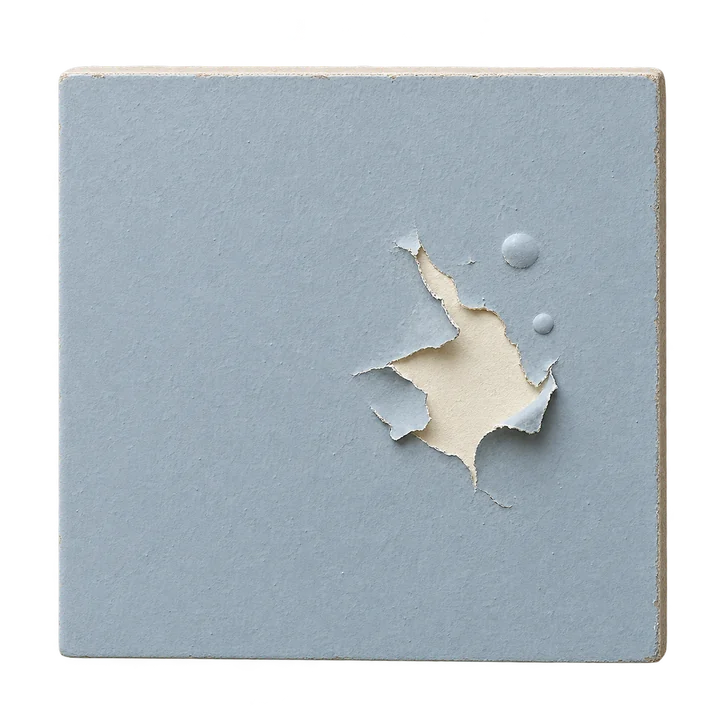
What does the damaged paint look like?
Start with the pattern, timing and condition of the wall. Note whether the problem appeared during painting, after the room returned to use, or months later. The observations below help describe the job; they do not replace checking the surface.
Scroll across to see all columns.
| What you see | Possible issue | Useful next check |
|---|---|---|
| Fresh paint lifts while rolling | An older layer is weak, or the new coating is not bonding. | Record the products and which layer appears beneath the lifted paint. |
| Bubbles or recurring failure near damp staining | Moisture may be affecting the coating. | Investigate the moisture source before cosmetic repairs. |
| Paint draws away from isolated spots | Grease, residue or another contaminant may be present. | Check previous cleaning, wallpaper removal and coating history. |
| Flakes expose a powdery or damaged surface | The paint, surface material or both need attention. | Establish the condition and depth of the affected material. |
| The coating stays attached but looks uneven | A coverage, texture or sheen problem rather than peeling. | Use the patchy-paint guide to distinguish the finish. |
Benjamin Moore's blistering guidance identifies heat, moisture and preparation among the possible causes. A bubble is a symptom, not proof of a particular damp problem.
Is the paint peeling, or is the plaster failing too?
A thin coating lifting from a firm wall is different from plaster breaking away with it. Describe any crumbly material, deep missing patches or visible movement without pulling more off to investigate. Paint preparation cannot restore the support behind a loose section of plaster.
If the damage extends into the wall surface, establish the repair needed before discussing decoration. A small cosmetic defect and a broad area of detached plaster are different jobs. My wall-hole guide explains why an unsupported opening is not a filler-only repair.
A fresh skim is not an automatic shortcut either. British Gypsum's guidance on plastering painted walls requires both the existing coating and its background to be in good condition, with the appropriate preparation and an adhesion trial. Where plaster is loose or cracks are moving, get the underlying problem assessed rather than covering it with another finish.
Why does old paint come off when you apply a new coat?
The new coat may reveal weakness in an earlier layer. Tikkurila describes inter-coat adhesion failure, including an apparently sound coating lifting because the bond beneath it was poor. It also identifies contamination and unsuitable preparation or primer as possible contributors.
Record the exact paint names, any primer or diluted first coat, and whether the wall was washed or previously wallpapered. Kitchen grease and cleaning residues need different preparation from an absorbent bare patch. Do not keep rolling over material that is lifting, or add an unidentified primer simply because the new paint is water-based.
For freshly plastered walls, check the original first-coat instructions and whether the plaster was ready when coated. The new-plaster guide explains the difference between a specified mist coat and a dedicated sealer. There is no universal dilution ratio that repairs a failing existing coating.
Does bubbling paint mean damp, especially in a bathroom?
It can involve moisture, but the appearance alone cannot distinguish condensation, a leak, moisture remaining in the background or a separate adhesion fault. Tell me whether the patch follows showering, wet weather or a known leak, and whether it returns after previous repairs. Those details help decide what assessment is needed.
Crown's troubleshooting advice puts finding and stopping the water source before treating and repainting a damp, mould-affected area. A decorative coating is not a repair for an active leak. Continuing damp, substantial mould or uncertain building damage needs appropriate assessment before a decorating job is agreed.
Even after a cause has been addressed, confirm the background is ready for the chosen coating. In bathrooms, account for ventilation and when the finish can tolerate normal steam and cleaning. A product being touch dry does not establish that readiness; see drying, recoating and curing.
Will primer or sealer stop paint peeling?
The right product can help prepare a suitable surface, but different problems need different products. A primer for adhesion, a sealer for porosity and a stain-blocking coating perform different jobs. Identify the background and failure before choosing one.
For example, Zinsser Gardz is specified for certain porous or problem surfaces, including plaster, damaged plasterboard paper and residual wallcovering adhesive. Its instructions still require a clean, dry, sound surface and removal of loose paint. That is not permission to seal an unidentified wet or unstable wall.
Zinsser Peel Stop has a different role as a binding sealer for suitable failing paint surfaces. The manufacturer also requires loose paint to be removed, and directs bare-plaster users towards a different product. Check the complete preparation and finishing system rather than treating either tin as a cure for every blister.
What is the right order for repairing peeling paint?
The sequence depends on what the assessment finds. For a suitable wall with a resolved cause and a sound background, the work generally follows these decisions:
- Agree the repair boundary. Establish whether failure is local or extends beyond the visible patch, and whether plaster repair is required.
- Choose a safe preparation method. Consider the existing coating before scraping or abrasion, then follow the selected products' preparation instructions.
- Remove unsound material and prepare the remaining edges. A new finish needs a stable base. Clean away contamination and preparation debris as the system requires.
- Complete compatible repairs and priming. Follow the repair material's drying requirements and the paint system's specified treatment of bare areas.
- Apply and assess the finish. Use the stated coverage and recoat conditions, then check the dry result before normal cleaning and use.
Benjamin Moore's flaking-paint guidance distinguishes superficial coating failure from damage extending to the background. It does not support simply painting over loose flakes.
For an old coating that could contain lead, assess it before disturbing it. HSE's old-lead-paint guidance identifies dry sanding and stripping as exposure risks. Arrange appropriate preparation advice rather than treating suspect paint as ordinary sanding dust. The wall-preparation guide covers the wider decorating sequence.
What should you send before arranging a paint repair?
Send one photograph showing the whole wall and close-ups of the affected areas. Include the room, approximate patch sizes, when the problem appeared, previous repairs and any known moisture issue. Keep the paint labels or invoices if you have them.
A useful enquiry might say: 'Bedroom wall repainted last month; two patches lifted with the second coat; previous paint unknown; please assess preparation and repainting of the wall.' This is an example to adapt, not a previous customer job.
Tell me whether you want only the damaged area made good or the whole wall redecorated. I can discuss suitable surface preparation and painting and decorating once the condition and scope are clear. Specialist damp investigation, structural assessment and substantial plaster repairs need resolving separately where required. Photos help plan the conversation; they do not confirm a hidden cause.
Sources used in this guide
- Benjamin Moore: paint bubbling and blistering
- British Gypsum: plastering over an existing painted wall
- Tikkurila UK: blistering, contamination and adhesion between coats
- Crown Trade: coating and moisture troubleshooting
- Zinsser UK: Gardz surface requirements and uses
- Zinsser UK: Peel Stop preparation and limitations
- Benjamin Moore: cracking and flaking paint
- HSE: old lead paint, CIS79
Show me the wall that needs attention.
Send your postcode, a whole-wall photo, close-ups and the paint details if known. Include when the failure started, any known leak or previous repair, and whether you want local making good or the whole wall repainted.
Painting and decorating enquiries are welcome from Kingston, Richmond and Merton.
Message me on WhatsApp